

There was a window that lived in a wall.
Because of that window, there lived a view:
a hut, two footpaths, a river,
a couple of ponds.
One sky served all of them.
People came and went.
There were trees, birds.
Everything lived in the window.
If nobody was around, the window remained shut.
If someone was there, the window was open.
To one side of it, in the wall, there lived a man.
—Vinod Kumar Shukla1
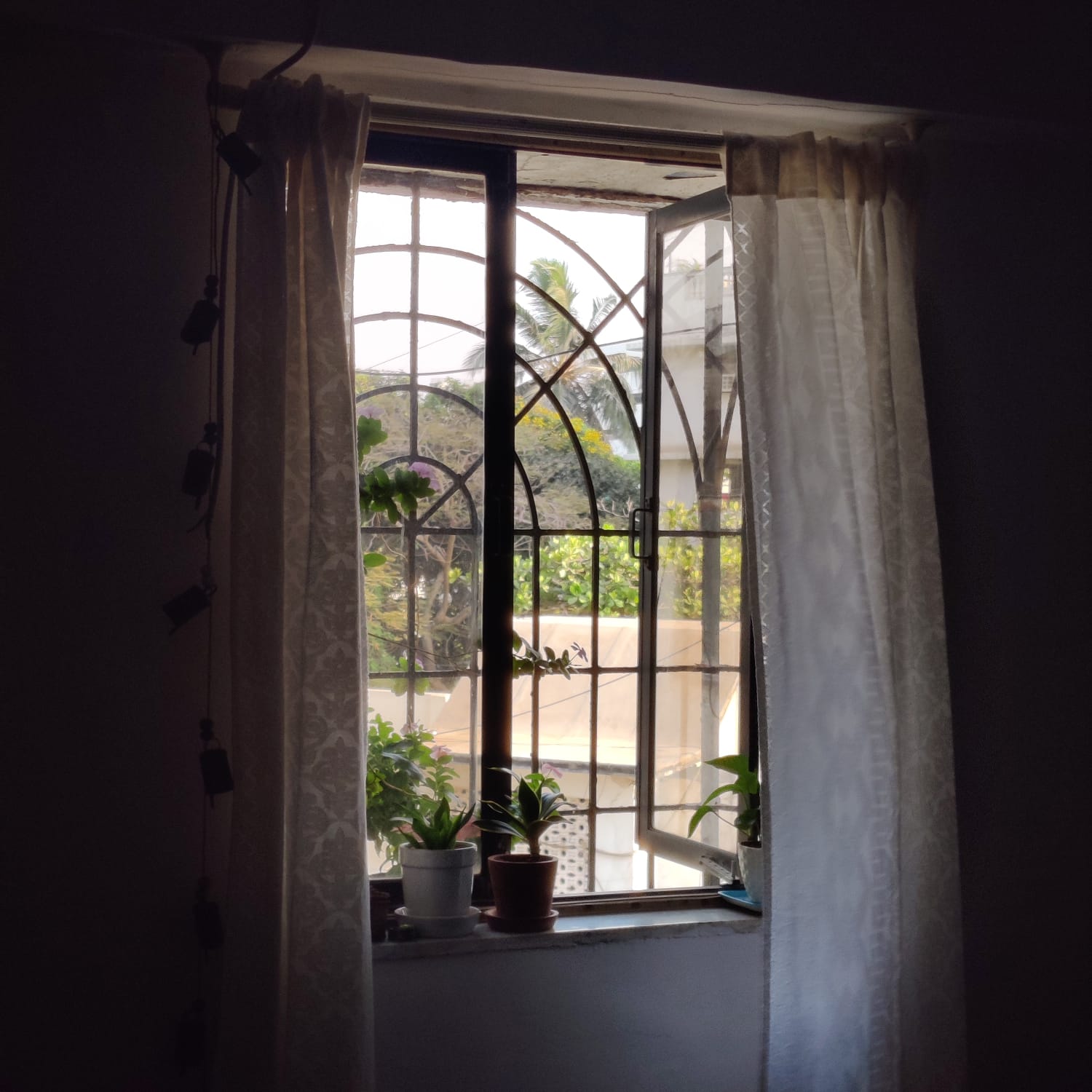
In the book Square, Circle, Triangle (2015),2 Bruno Munari recounts the story of a woman suffering from some kind of a brain disease. The woman was presented with a simple square and asked to copy it. She was unable to replicate the square. She instead drew two squares side by side, adding a cross in the middle and an arch on top of each. When asked what the figures meant, she said, ‘The windows of a church.’ The abstract square held no meaning for her, and she could not draw it. But two church windows that could have existed and held meaning for her as concrete objects, she could draw.
Actually existing windows might also be just a concept. Natsuko, the Tokyo-based, working-class protagonist of Mieko Kawakami’s novel Breasts and Eggs (2021),3 believes that if you want to know how poor someone is, you should ask them not what they possess but how many windows they have. If the answer is none, or maybe one or two, this is revealing in itself, she believes. When Natsuko shares this with someone, she is castigated: ‘Come on, though. What if you have one window, but it’s huge, with a garden view or something? You know, like one of those really nice big windows. How could that mean you’re poor?’ Natsuko, who has always been poor, wonders, ‘A garden view? A nice big window? Who has a garden, though? And what the hell could make a window “nice”? For poor people, window size isn’t even a concept. Nobody has a view. A window is just a blurry pane of glass hidden behind cramped plywood shelves. Who knows if the thing even opens. It’s a greasy rectangle by the broken extractor fan that your family’s never used and never will.’

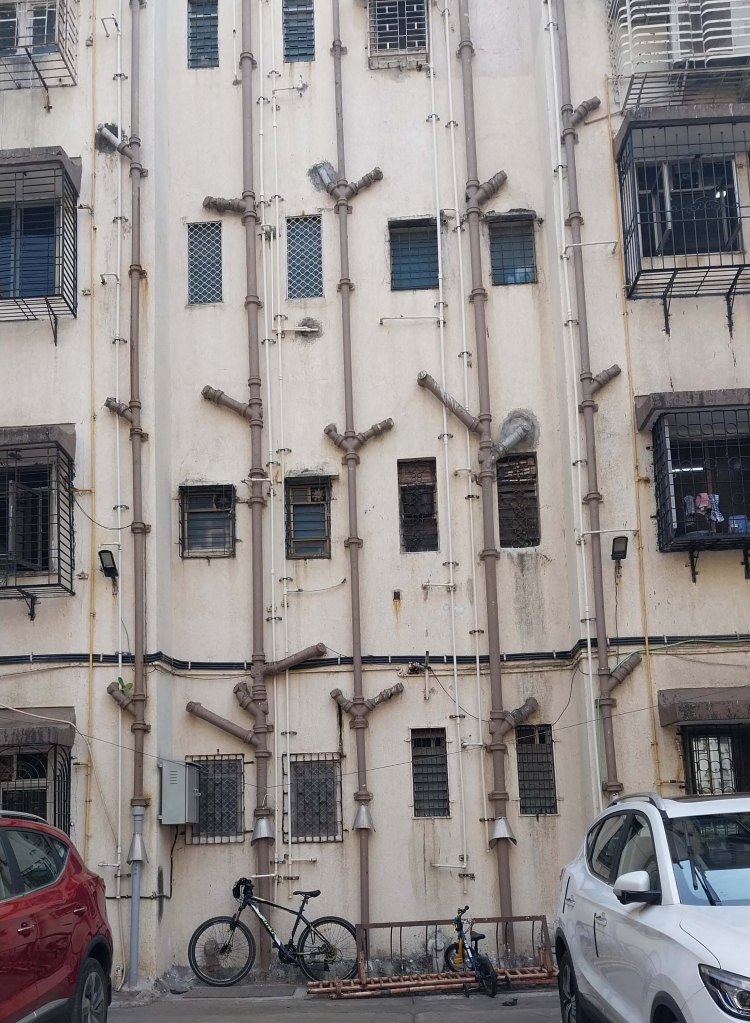
I’ve been thinking about windows. Since I moved cities, I’ve been thinking about windows. And looking at and through them. Through this looking, I move forward with time, sometimes attempt to hold it still, and at other times, let it take me elsewhere, to a time that has passed or is perhaps waiting for me. Some windows and their views remind me of other windows in other places, including windows that live in books and films, all real because of the feelings they evoke and the meanings they reveal or don’t. I write this piece as I live in a new city, with curiosity and hesitation, looking at it through its windows and through the other windows these open up.
Windows holding things
In this city, wherever I am, at home, in the market, a park, or enroute in an auto rickshaw, there are buildings looming over me, their windows like a million eyes watching me, even when I’m not looking, especially when I’m not looking. When I’m walking in the street, I can never focus just on the ground or eye level. I am constantly craning my neck upwards. Sometimes with the explicit purpose of picking up some hacks for living in this city—for instance, to understand what systems people have created for keeping plants or drying out their clothes, in houses with swallowed-up balconies or non-existent ones. When I cross my friend’s house on the way to buying paneer, I always look up towards her bedroom window on the first floor. If there are clothes hanging outside or I can see the lights on and the fan moving, I know she is in the city and not travelling. Most times though, the craning of the neck upwards is a tic I seem to have no control over, a tic that plays out only in this city, its windows beckoning to me.
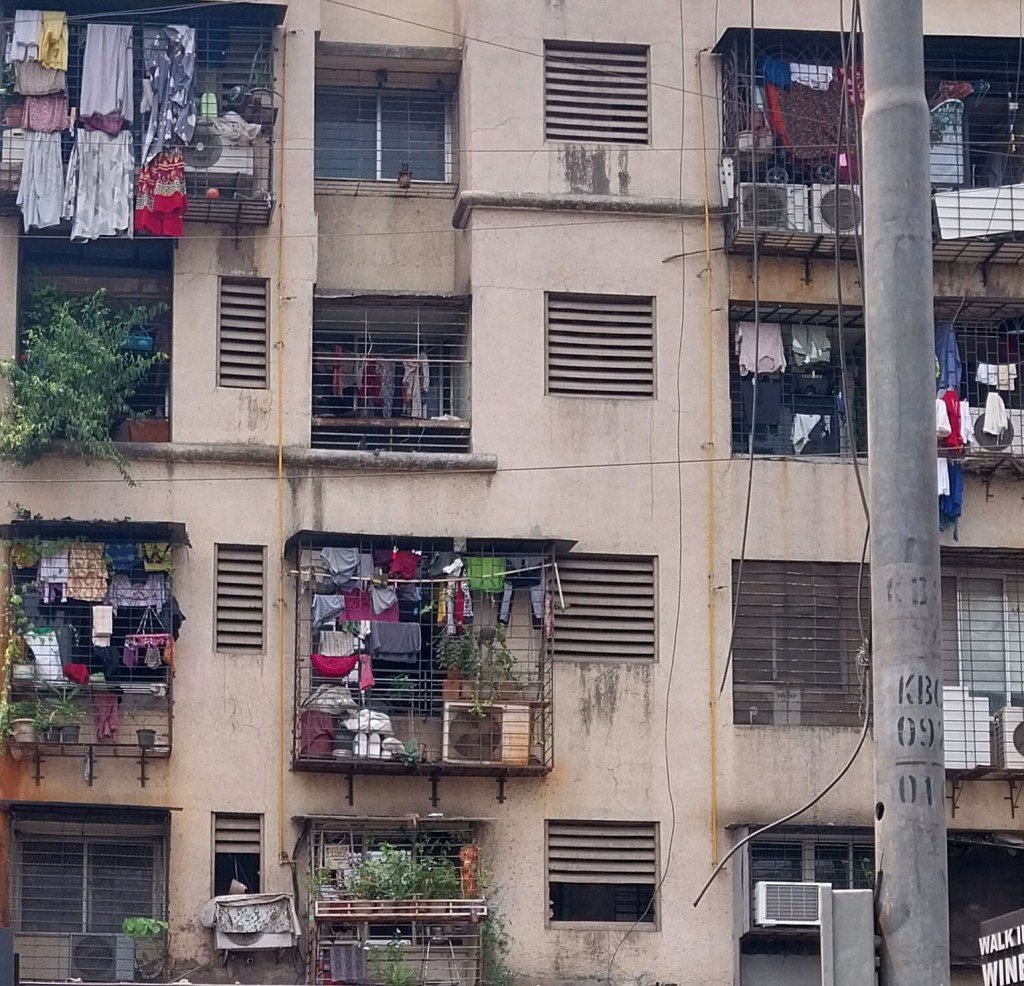
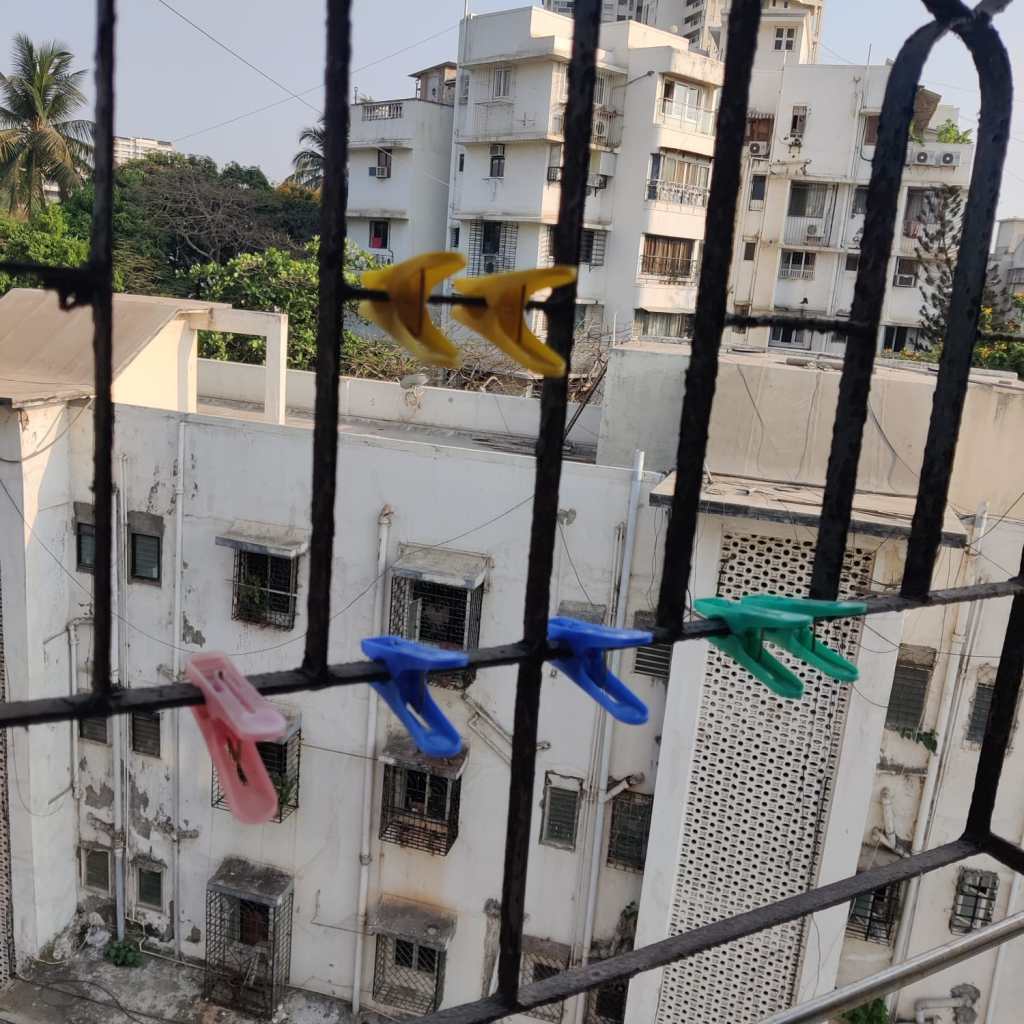
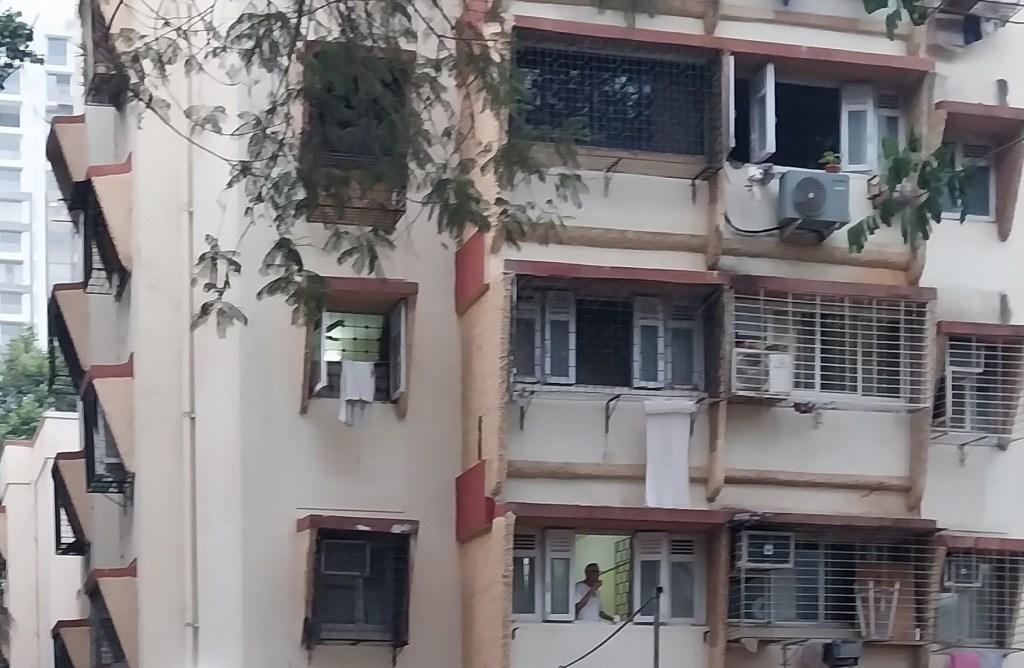
Caged in from the outside by metal grills jutting outwards, windows here sometimes stand in for balconies, sometimes even for storerooms and as extensions of kitchen counters. They hold together the daily objects and debris of homes. Sometimes a lone leafy plant or a long-dead one, an upside down plastic bucket or chipped tea cups. But often a plethora of objects. Clothes hanging from varied contraptions, air-conditioning units, cats perched on air conditioners, ladders, steel baskets with washed utensils. Decorative items demoted from their pride of place inside the house—a pirates of the Caribbean skull, a stuffed dog with wooden legs, or plastic flowers in metal vase. And long-forgotten discards—cartons, delivery paper bags, worn-out shoes, plastic odds and ends. Everything curiously makes space for others and more when there’s so little space, much like the promise held out by the myth of this city.
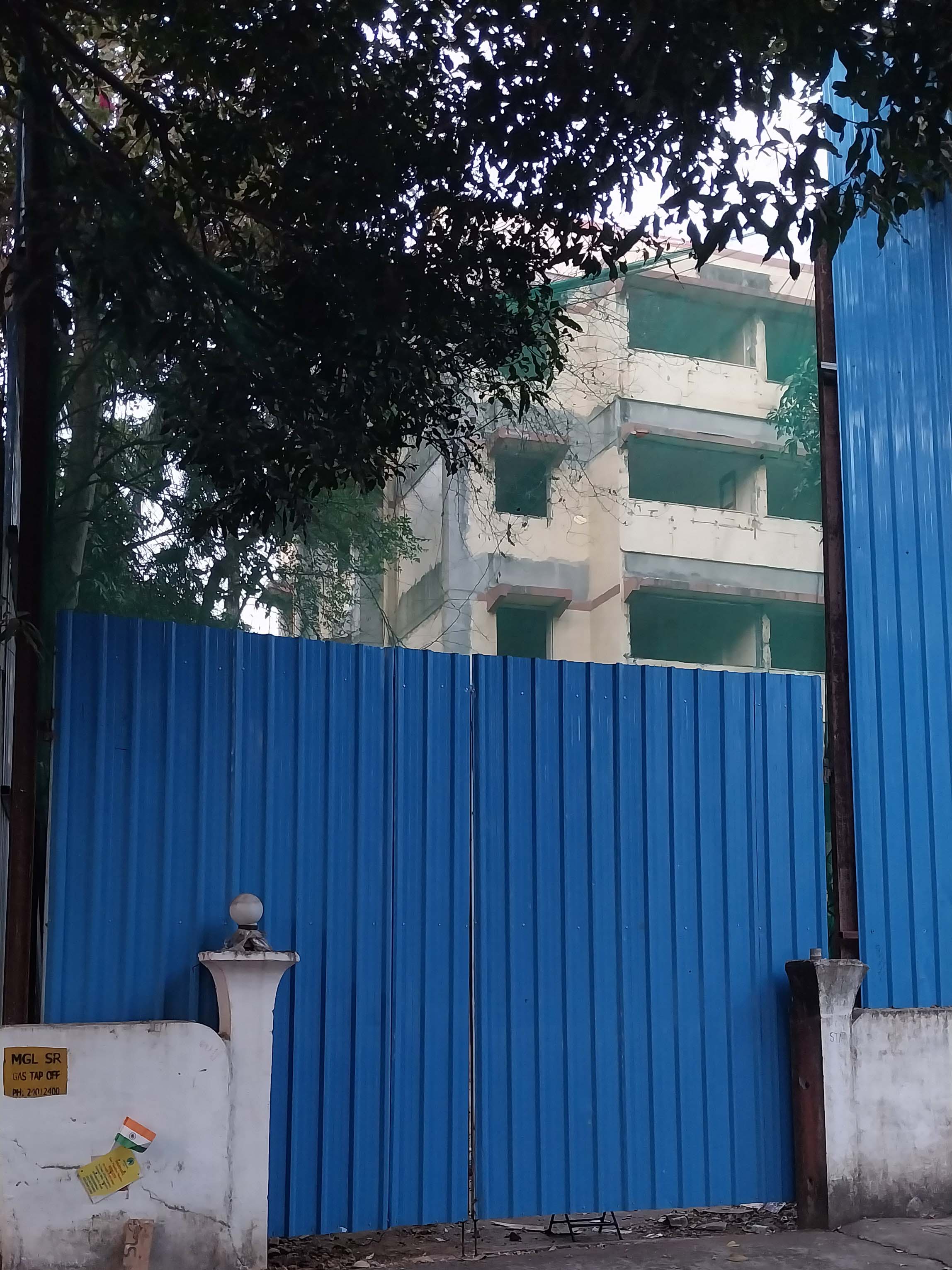
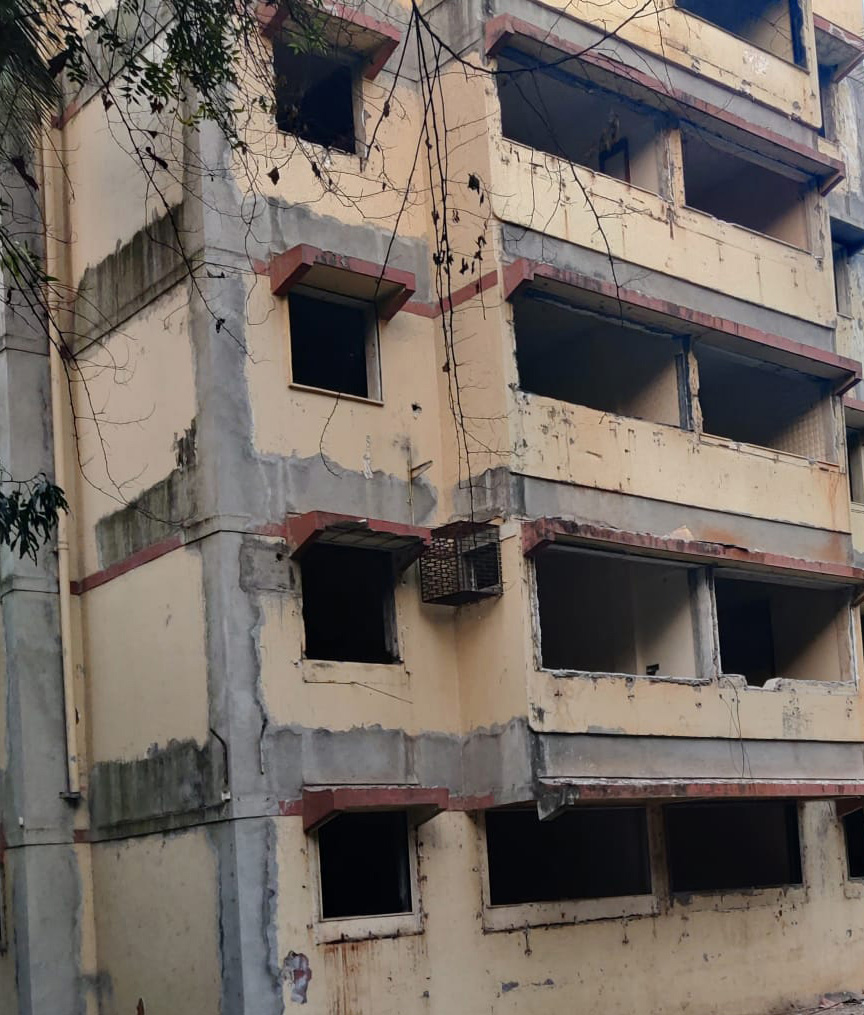
When a building goes into redevelopment, first, the objects on the window grills disappear, and then, the windows themselves. Till before the building disappears, it looks like its eyes have been gouged out. It’s still looking out but can’t see a thing.
Windows keeping time
I wake up in the morning to the sound of possibly the first metro train passing by. The station is visible from a set of windows in the bedroom. The first thing I do on waking up is open the windows of the house to let in the morning breeze. The morning breeze is like the morning breeze. Cool and not yet inundated with any strong smell.
Sometimes I stand by the window in my study room to see if the woman in the window of the block to the right of mine is up. She invariably is. Sometimes I catch her making tea. Sometimes she is drinking it, standing behind the kitchen counter, gazing outside, pausing to lean towards the window and drop stale rotis on the awning of the window one floor down. Sometimes she’s on the phone, her body arched towards the window, as if she doesn’t want to disturb others in the house who are still sleeping. Or perhaps it’s an attempt to keep her conversation private. Sometimes she’s half-sitting, half-lying down by the window, perched on the kitchen slab, legs bent at the knees, one arm supporting her head and the other lifting the tea cup to her mouth. I’m fascinated by the plasticity of her body, how it manages to fit into a corner of the kitchen counter and how at ease she appears. If I happen to cough, she looks towards me, takes my presence for a second, and then looks away.
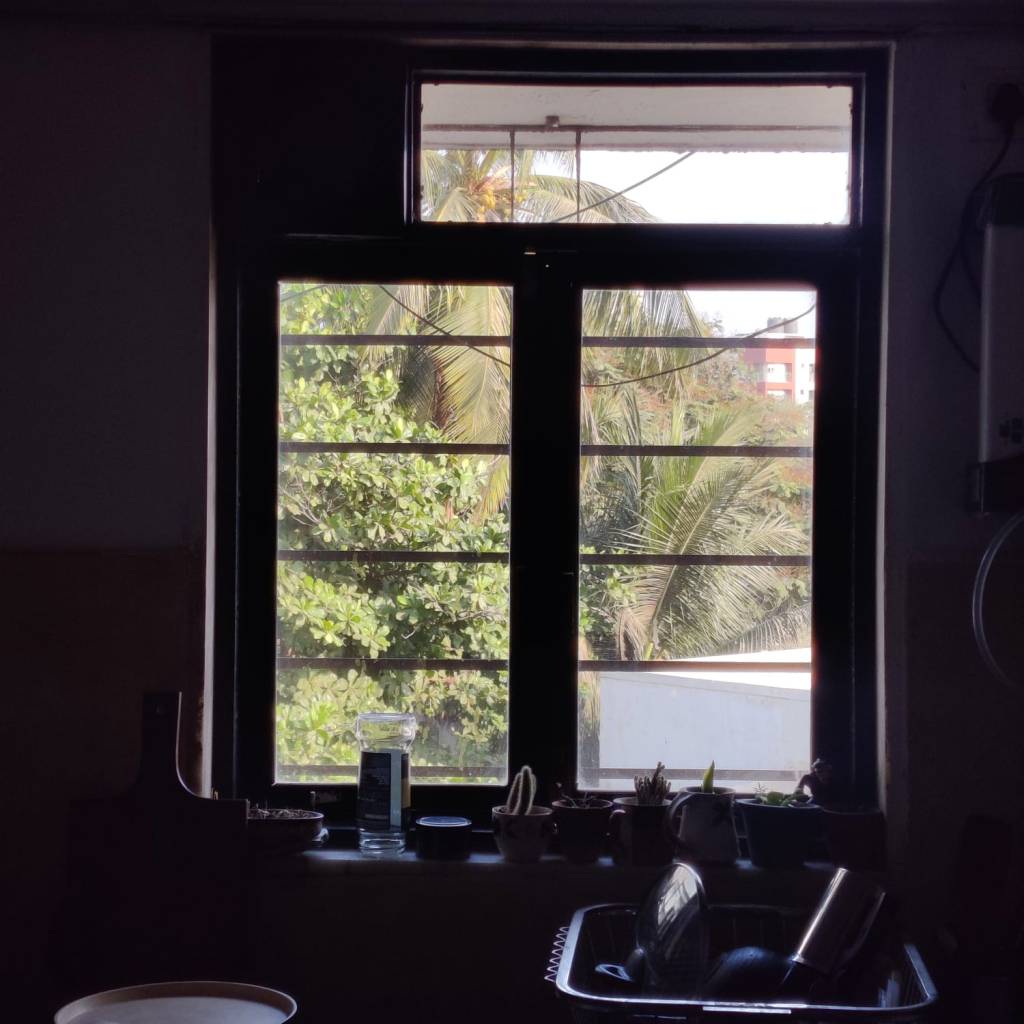
In the film The Lunchbox (2013), the kitchen window is a device that forges the friendship between Ila, the lonely housewife, and her elderly neighbour Despande Aunty. The window serves as the go-between for their exchange of gossip and groceries, recipes and songs, softening the drudgery of their domesticities. I know I will never share such a camaraderie with the woman in the window. And I don’t long for it. But she keeps time for me as I create my rhythm in a new city. I don’t have to look at the clock to know that I have overslept if I open the window and notice that she’s chopping vegetables instead of making or drinking tea. There’s something reassuring about this pared-down, unfettered sociality where we are aware of each other’s presence behind our respective windows but don’t have to take it any further. And about these windows that connect and don’t, entwining and untwining my time with that of the woman at the window.
Windows teaching lessons
In the essay ‘Ralph Fasanella and the Experience of the City’,4 John Berger argues that ‘A modern city … is not only a place, it is also in itself, long before it is painted, a series of images, a circuit of messages. A city teaches and conditions by its appearances, façades and its plan.’ Berger demonstrates how some of these lessons are contained in Fasanella’s Manhattan paintings, focusing in particular on the tenement windows in the paintings and the signs they contain. While the windows, much like the bricks of the tenement buildings, are repetitive, each window looks distinct, the difference a sign of the varied lived experiences the windows frame. Yet, for Berger, this difference is an illusion. For the people and their lives framed by the windows are replaceable (they might move out, die, or disappear, he points out). The only thing remaining constant is the frame of the city—this is the first lesson that Berger gleans from Fasanella’s windows.
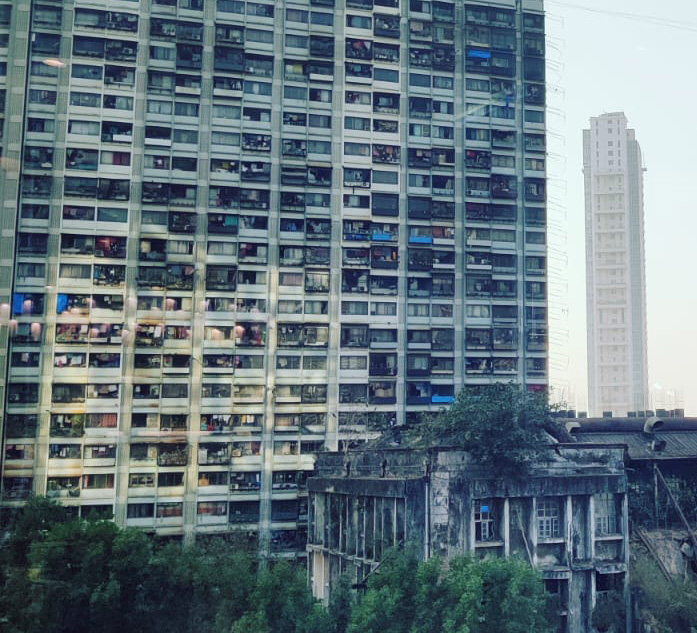
There is, for Berger, no escape or respite from the iron cage of the city’s frame, from what he regards as lessons that are taught as law to the newly arrived in the city. Yet, he concedes that his reading of the windows is based on a conceptual leap—that of deliberately ignoring experiences, for instance, Fasanella’s love for Manhattan. For he is ‘writing about the lessons of the place, and not about the people and the ingenuity with which they often resisted the lessons.’
I stand behind different windows in the house at different times of the day, and look out at various people and activities. Those within my apartment complex: children racing bicycles, the kudawala sorting the day’s waste, a coconut plucker on a tree right outside the window of my apartment, a young woman walking her cat on the opposite terrace, old women sitting in weather-worn benches in the dusty patch which once might have been a lawn, the ‘crazy’ uncle who is holding out against redevelopment, laughing and talking loudly with his friends. The street outside: the vada pau seller in the street corner, who I don’t quite see but know has started his day because I can see the top of the bright-red umbrella covering of his stall and the cluster of autorickshawalas around it. The windows of other apartments that surround me: someone watering plants, someone doing yoga in their living room, construction workers perched precariously on new building towers in progress. Every sight framed by these slightly ugly, often dirty, and always malfunctioning windows of mine opens a window into this new city I have no intention of living in for too long and which, I tell myself, I will not burden myself with loving. Each window grounds my feet and chips away, bit by bit, the jagged judgment I hold towards something not entirely familiar and not quite home. When I look keenly at the all-glass façade of a newly redeveloped building in which I’ve never sighted people and then see a red chaddi and a faded bedsheet hanging from a window, the banality of this sight makes the intensity of my disdain at the ugly, shiny building somewhat ebb away.
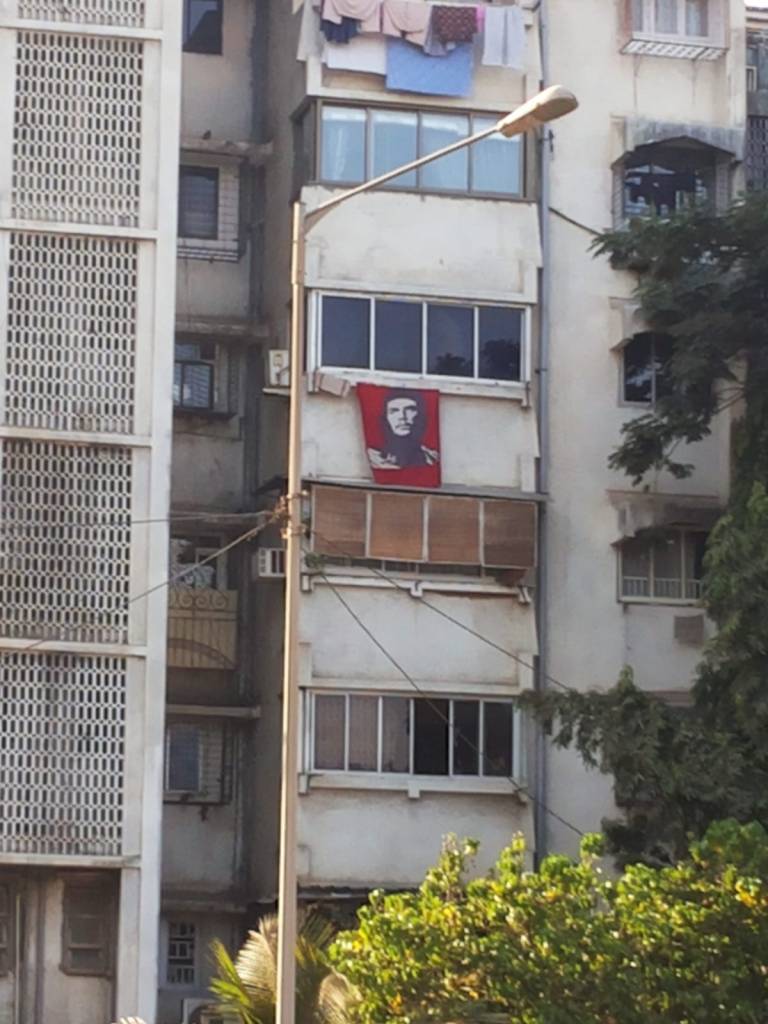
No matter how harsh and homogeneous the appearance of the city might be and becoming more so, perhaps, the small and ordinary, persisting in its myriad expressions and experiences can never be held together neatly by any larger conceptual frame of the city. It can only ever hold meaning for those living the city. And if this multiplicity is an illusion, maybe it is an illusion worth nurturing, worth holding on to, notwithstanding the lessons the city might teach us.
Windows opening windows
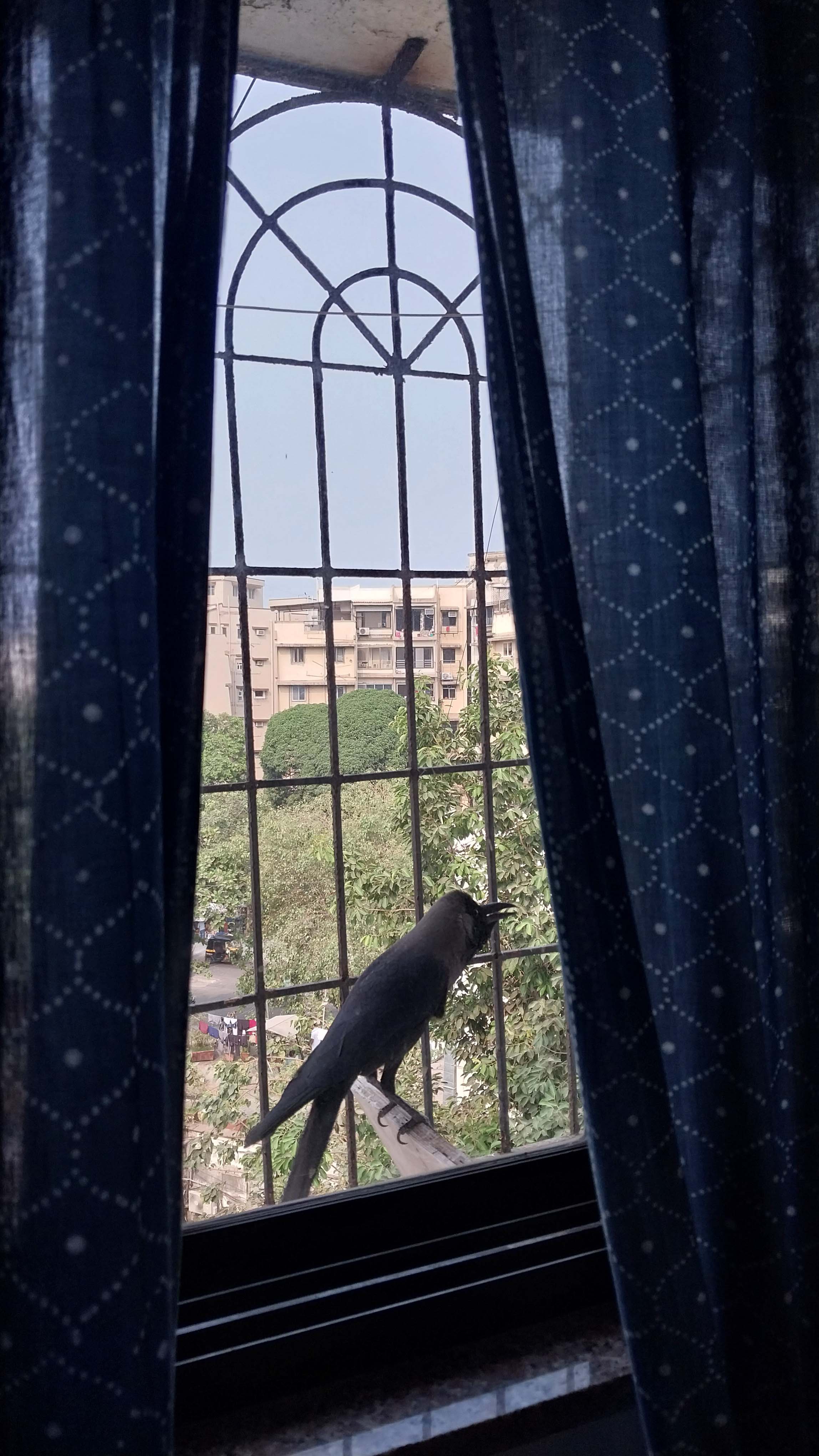
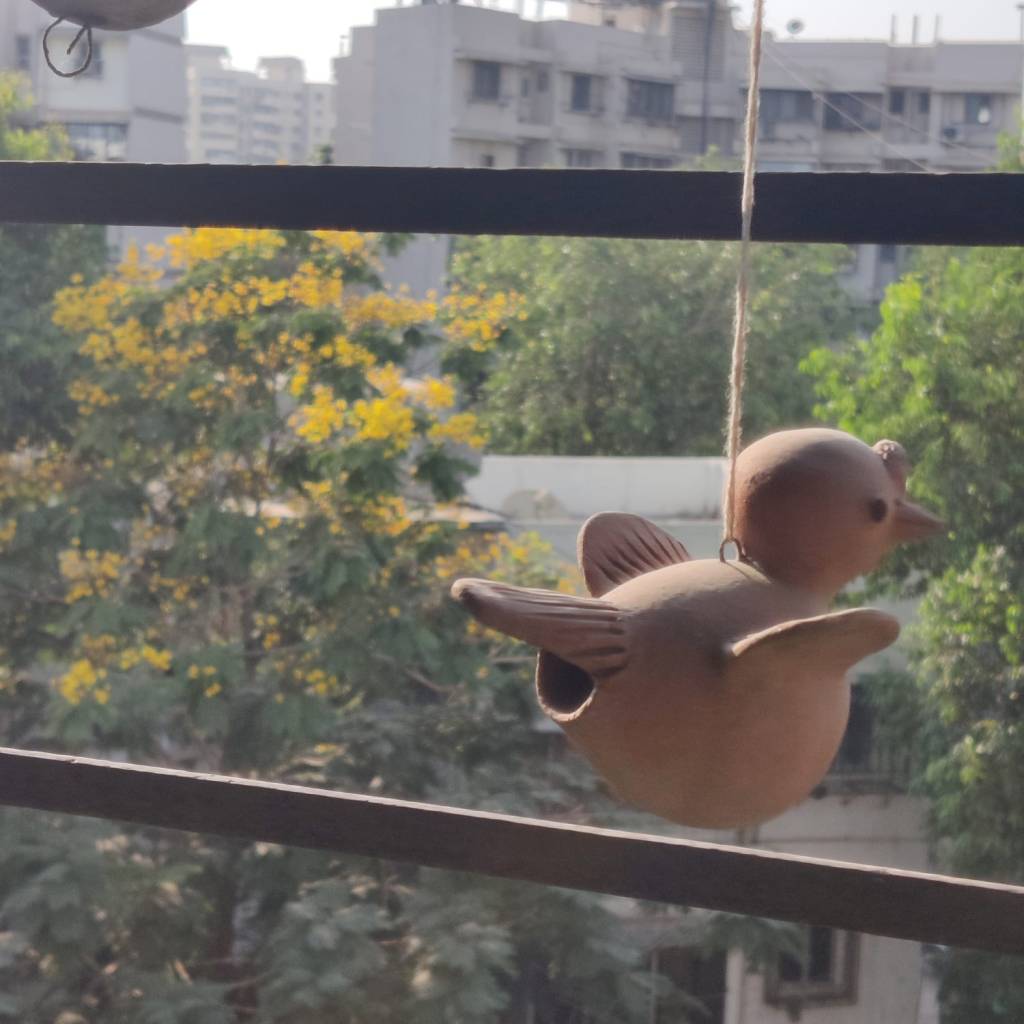
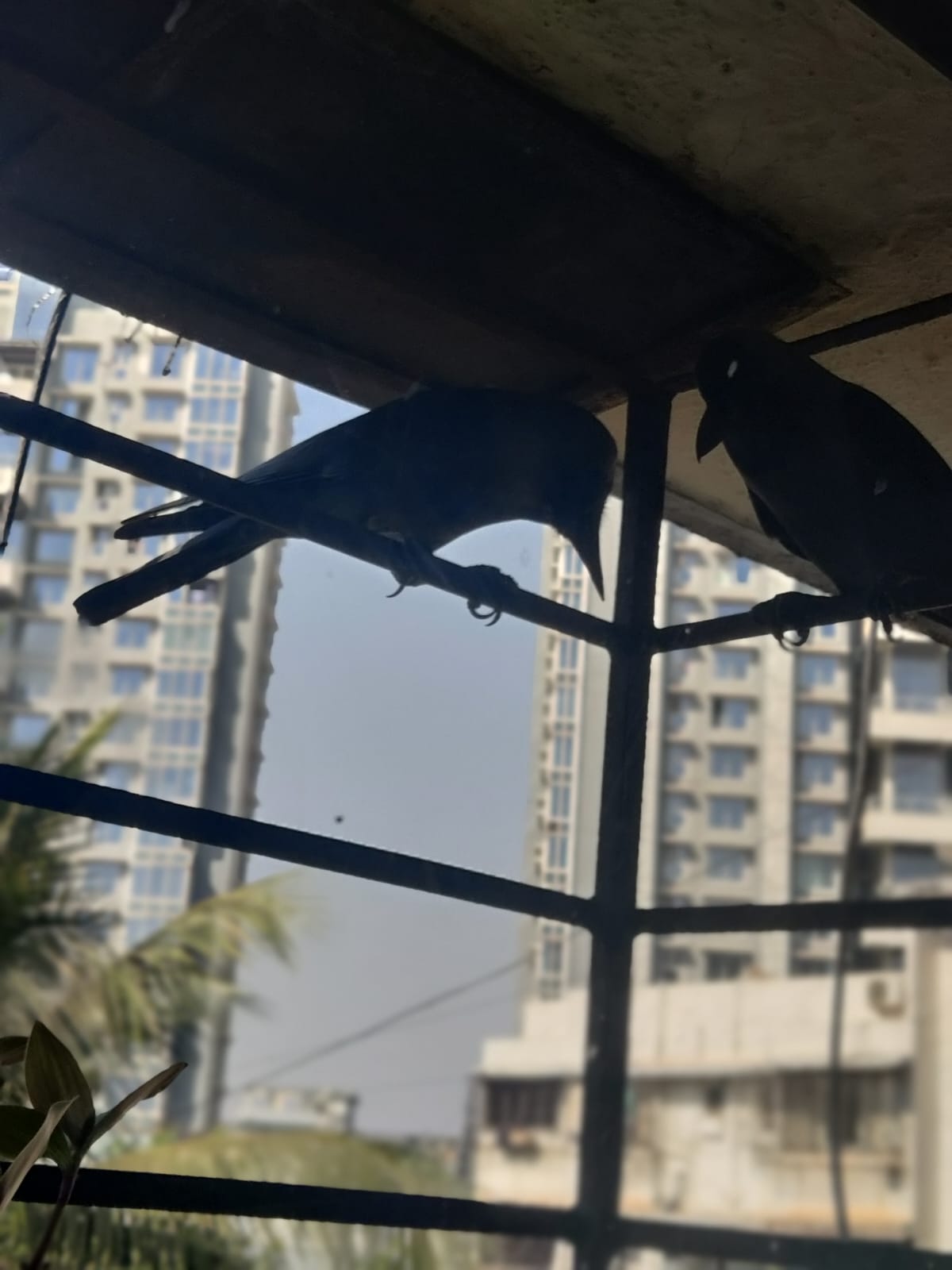
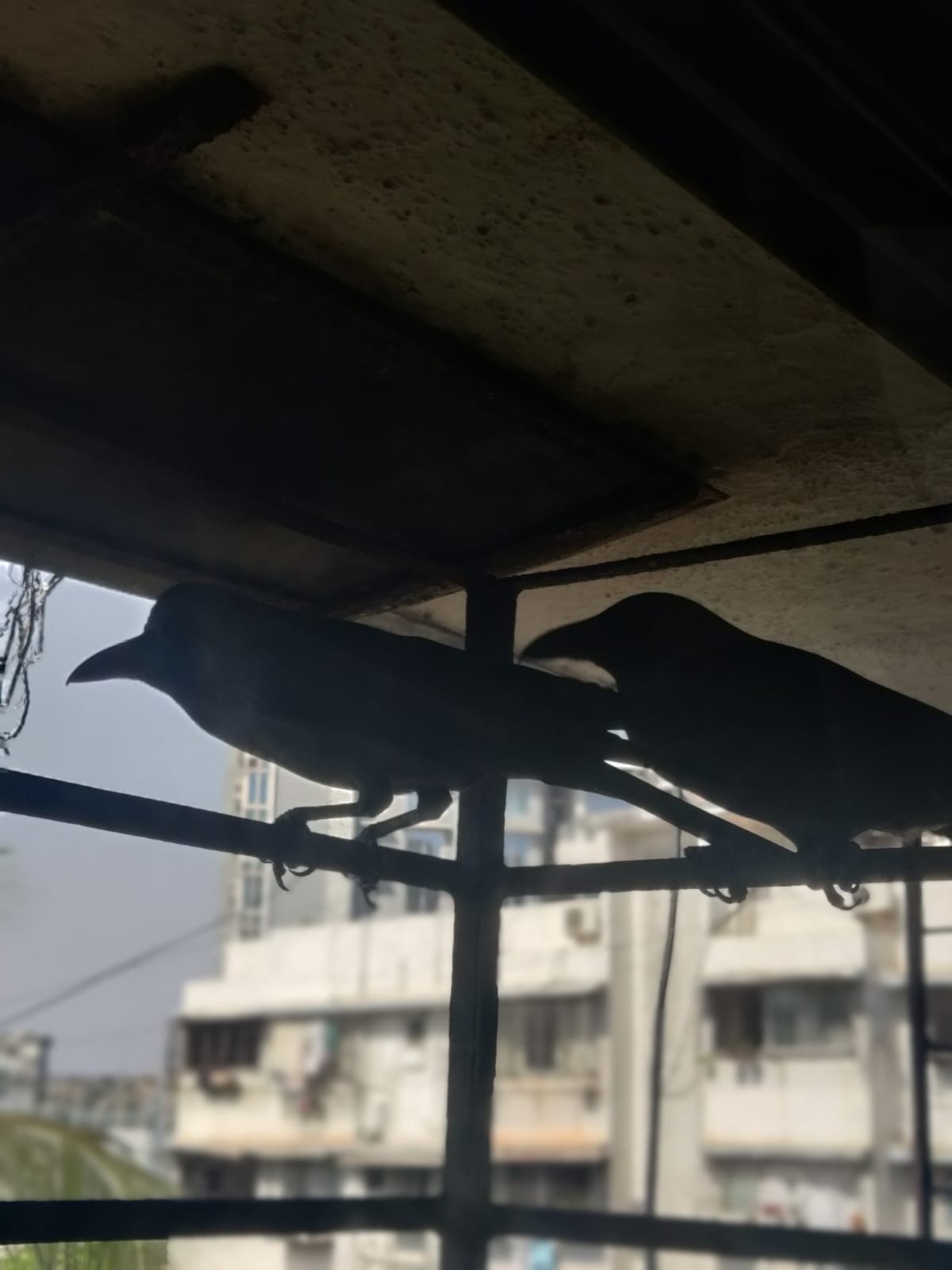
I brush my teeth watching the moving silhouette of two pigeons, grunting and hopping outside the closed slats of the bathroom window. From beyond the window, somewhere a magpie robin is singing a beautifully haunting bird song. In a corner of the window grill in the living room, an out-of-tune crow practises singing for hours at end, getting more and more distraught about not making any improvement. In some time, he is joined by another who soothes him by pecking his neck. A host of sparrows hop around, flitting away and back, around the kitchen window, even as there aren’t any plants on the sill, nor any food or water that I leave for them. A pair of sunbirds dart in and out of the window grill outside the bedroom, piercing all other surrounding sounds with their shrill ‘chwing, chwing’. They have a love for the hibiscus flowers from which they hang upside down. A sparrow is carrying away bits of my monstera’s moss stick to make a nest. A red-vented bulbul comes to check if my partner is at his writing, scolds him loudly because he’s not, and flies away. Every new bird I see or hear from my windows delightfully pokes holes in one of many clichés that I construct about the city—that the city is only habitable for crows and pigeons.
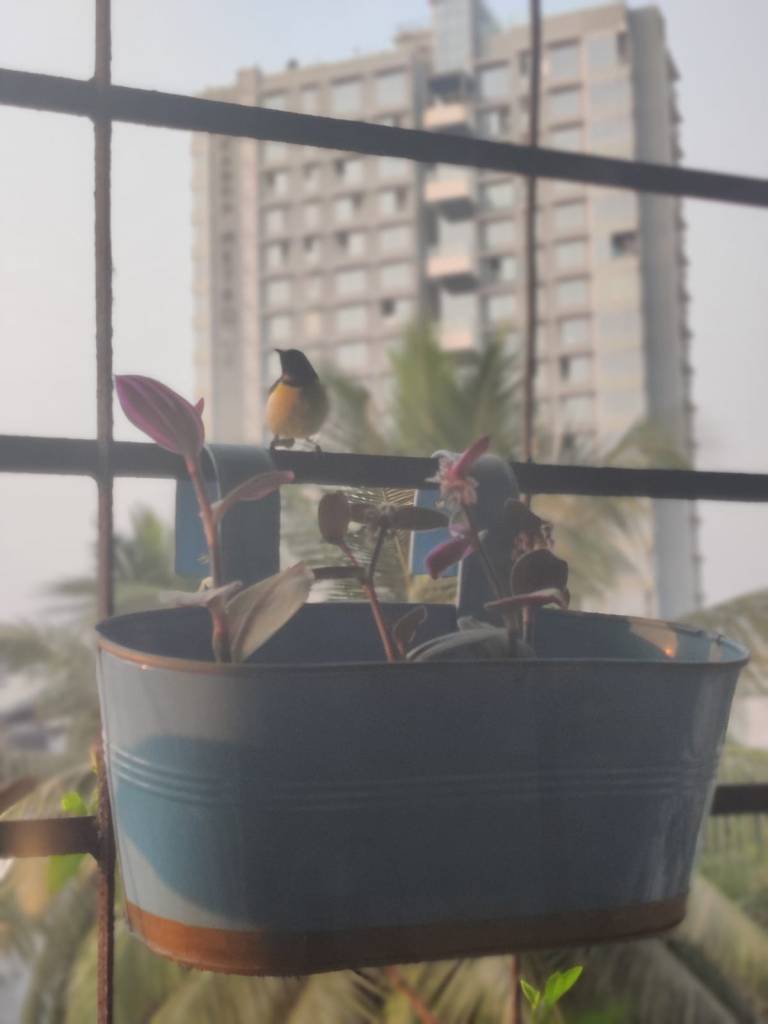
The birds in my window make my mind travel to another window. A window that lived in the wall of a small and sparse one-room house in a cluster of other houses in a small-town basti. The window makes the smallness of the life in the room expansive, leading many paths into the room and creating others beyond it. Travelling on these many paths is Raghuvar Prasad, who lives in Vinod Kumar Shukla’s novel Deewar mein ek khidki rahti thi (2024).5 Raghuvar Prasad works as a lecturer in a college in a village eight kilometres away from his house. He just about makes ends meet on his salary of 800 rupees a month, from which he also sends money to his family in the village. Yet, Shukla’s book is not about the trials and tribulations of an ordinary man with limited means. The novel presents to us the rich, textured interior life of Raghuvar Prasad and the intimate connections he forges with his environment, an interiority that is mostly absent in fictional and academic constructions of the ‘urban poor’. The elements of fantasy and magic the book is imbued do not merely come from the flights of imagination made by the author or his protagonist but stem from the very ordinariness of everyday life and a deep sense of curiosity and connection with living the ordinary.
Outside Raghuvar Prasad’s window, the neighbours’ children have stacked up bricks on to which they climb to peek in. This peeking into the room opens up very many possibilities: ‘Like if he [Raghuvar Prasad] was sitting then the possibility of him standing. If he was reading, then the possibility of him whistling. If he was walking around then the possibility of him lying down. In an empty room, the possibility of him suddenly appearing. From the possibility of him making tea to the possibility of every second. Raghuvar Prasad did not mind the children watching this way. The children’s coming opened one more window into the loneliness of the four walls of his room. The wind blowing in through the window, he liked.’ Raghuvar Prasad knows that if he closes the window on the children, then he will also block the breeze, light, views, and the morning from entering his room.
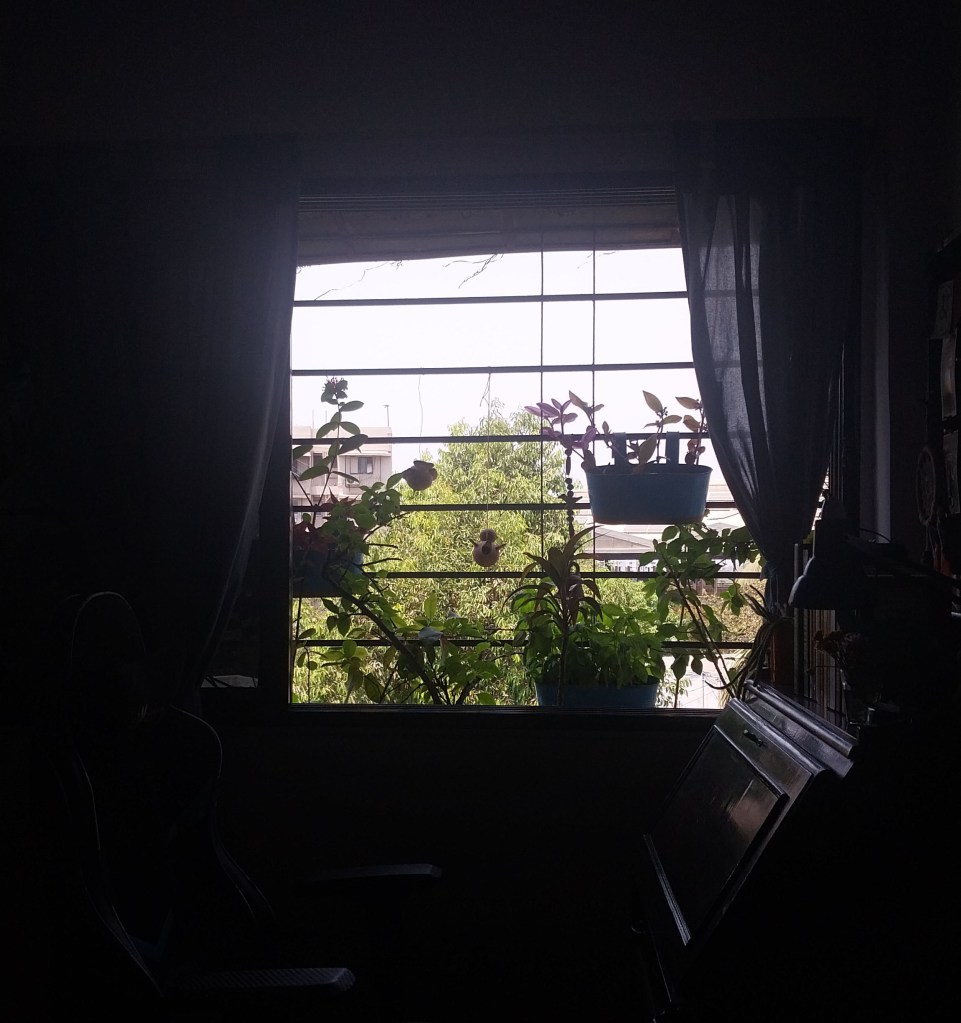
When Raghuvar Prasad is joined by his wife Sonsi, the small room expands further to contain the love of the newlywed couple, creating newer paths leading out of the window. The couple often climb out of the window and walk along a trail to reach a beautiful place inhabited by jamun, banyan, mahua, and mango trees, paradise flycatchers and parakeets, a narrow, shallow river with clear water, monkeys, a big langur, and Boodhi Amma’s tea shop. In this beautiful place, Raghuvar Prasad and Sonsi combine washing clothes and bathing with picking fruits, playing games with children, talking to birds, and loving each other. One day Raghuvar Prasad takes his colleague to this place—the two make their way after jumping out of the window. The colleague hadn’t known about the existence of this beautiful place and is fascinated. Later when he tries to find the place on his own, he is unable to, making him believe that that window in the room is possibly the only way to reach this place. Shukla tells us that this place is Raghuvar Prasad’s ‘mann ki jagah’, which has the dual meaning of being a place of imagination and a loved place. For places are created not only by our imagination but also by how we pay attention to them with love.
The window living in a door
There is a window that lives in a door. This door is the outside door. Behind it is the inside door. When the inside door is open and the outside one closed, this window carries the breeze from the jaali in the staircase landing into the house. This breeze mixes up with the breeze coming from the windows in the house, the ones that live in the walls of the house.
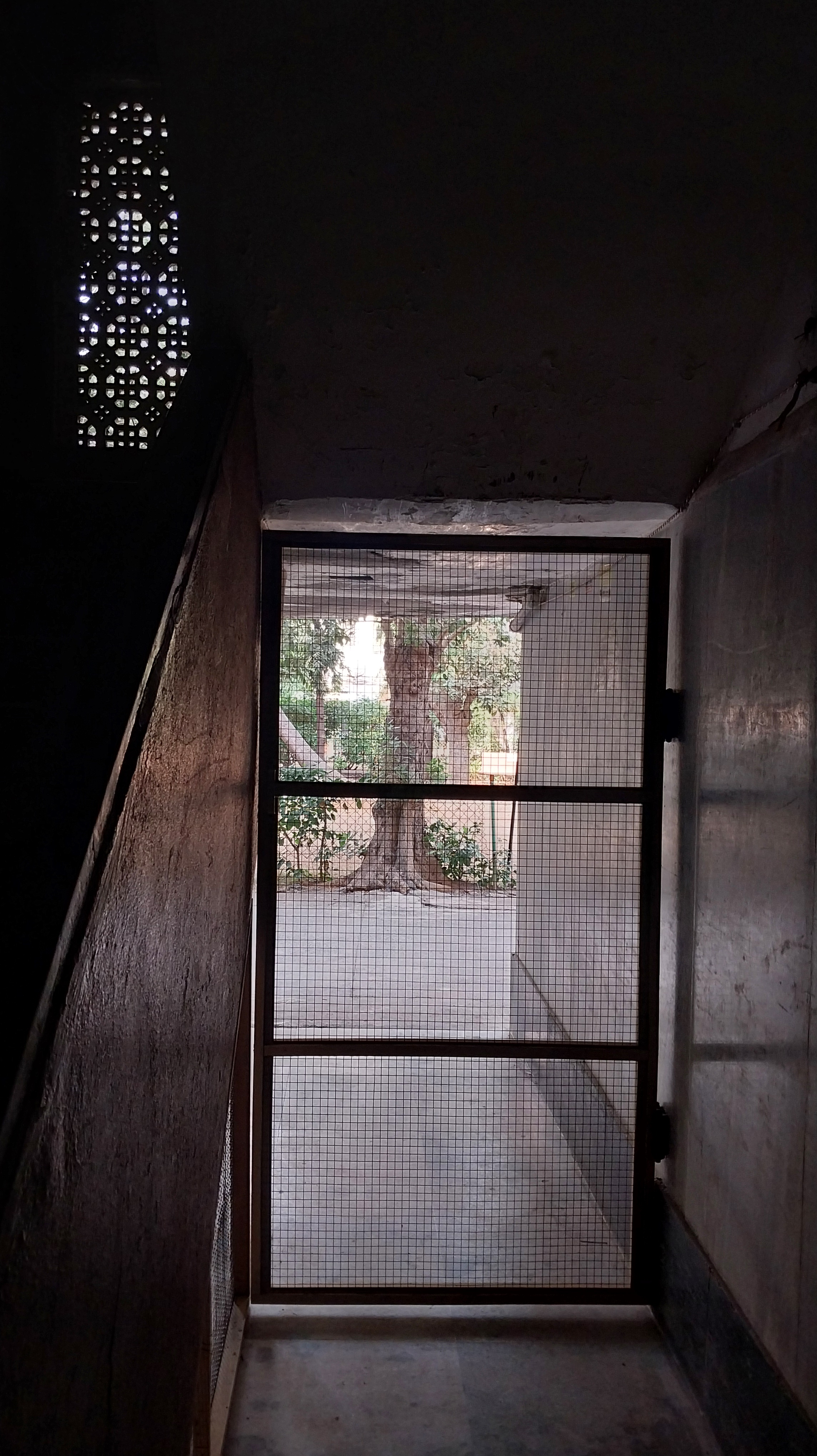
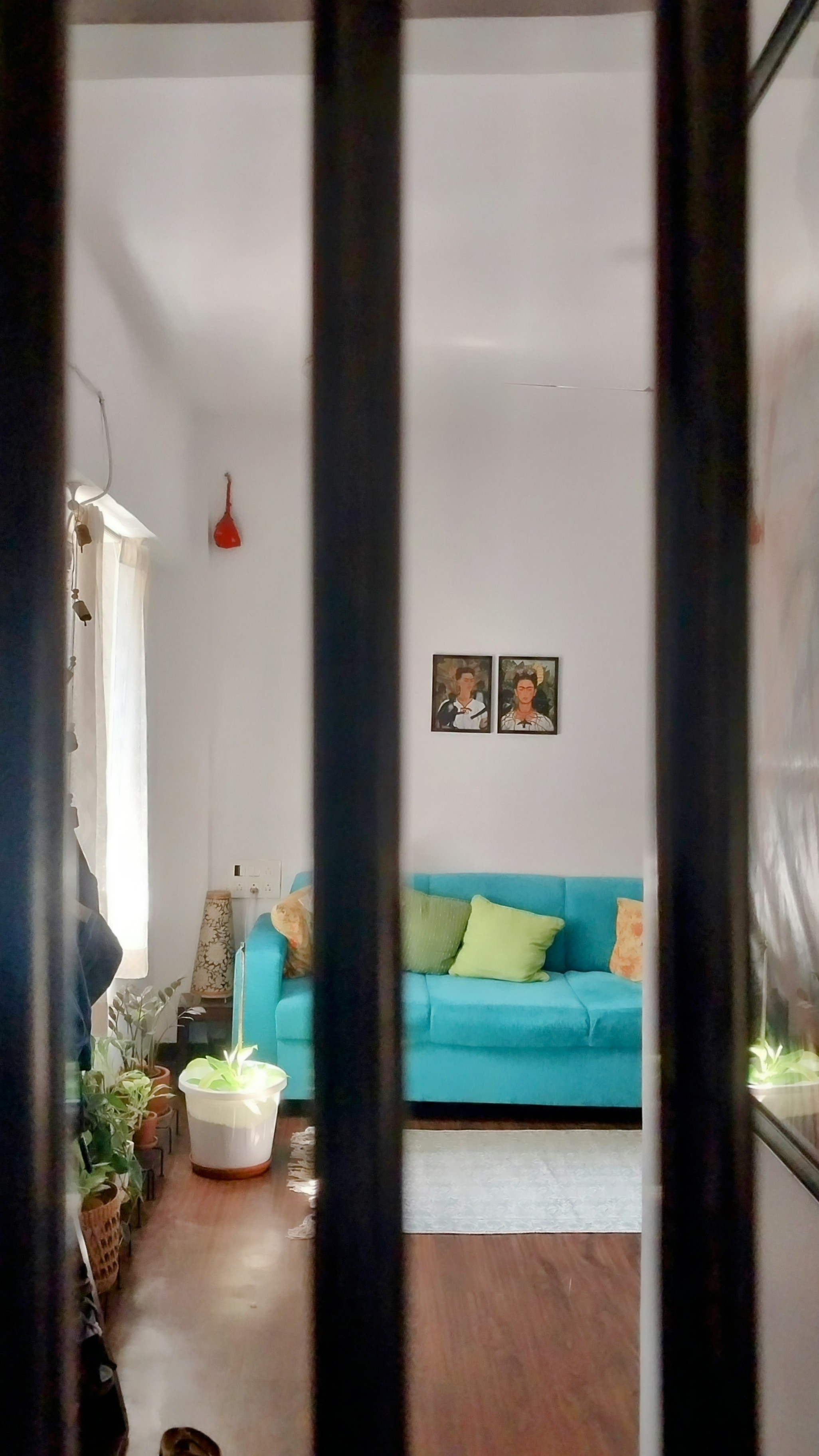
She is stepping out of the house for a quick run to the grocery store. She decides to leave the inside door open and pulls shut only the outside door. Standing outside, she peeps in through the little window with bars on the outer door. She is not inside the house. But she thinks, ‘This is a house I could live in.’
—Samprati Pani
All photographs © Samprati Pani and Sambit Mishra.
Cover image ‘Let sleeping cats lie’, by the author.
Complement this essay with Sarover Zaidi’s ‘Homing and unhoming: taxonomies of living’, on the interaction between the messiness of dwelling and the standardization of modernist apartment housing.
Notes
- Vinod Kumar Shukla, Treasurer of Piggy Banks, translated from Hindi by Arvind Krishna Mehrotra, Chennai: Westland Books, 2024, p. 93. ↩︎
- Bruno Munari, Square Circle Triangle, New York: Princeton Architectural Press, 2015, p. 67. ↩︎
- Mieko Kawakami, Breasts and Eggs, London: Picador, 2021. ↩︎
- John Berger, ‘‘Ralph Fasanella and the Experience of the City’, in About Looking, New York: Random House, p. 104. ↩︎
- Vinod Kumar Shukla, Deewar main ek khidki rahti thi (in Hindi), Noida: Hind Yugm, 2024. Extract from the book is my translation, p. 11. ↩︎

 Chiragh Dilli
this is mumbai 🙂
LikeLiked by 1 person