As I journeyed through the city with these women, I had been thinking a lot about landscapes. When the parts of the story no longer seemed to coalesce into a plot, I thought about how incongruous things can hang together in a place, in an atmosphere. And so, I found that the antidote to my own growing vertigo was to join these women on excursions (ghumna) around the city. Though these outings happened infrequently, to go ghumna was a favourite activity of many of the women I spent time with. These women, who hailed from poor, predominantly Muslim neighbourhoods such as Nizamuddin Basti, Okhla, and Jaitpur, spent much time plotting the next opportunity to go ghumna, often concocting elaborate cover-ups for family members.
Tag: chiraghdilli
The House of Dreams
If you’re walking near the dargah of Hazrat Nizamuddin Auliya in the neighbourhood of Nizamuddin Basti in Delhi, you might cross, but not notice, a grey door with a grey metal flower knob and no signage. If you are passing by on a Tuesday afternoon, you will, most likely, notice a group of children in descending order of height gathered outside the grey door. The children dart in every five minutes, running up the stairs behind the door that lead to the first and second floors of the building. They leave trails of chips, flowers, coins, plastic toys, and small footwear in their wake.
Windows to the city
I’ve been thinking about windows. Since I moved cities, I’ve been thinking about windows. And looking at and through them. Through this looking, I move forward with time, sometimes attempt to hold it still, and at other times, let it take me elsewhere, to a time that has passed or is perhaps waiting for me. Some windows and their views remind me of other windows in other places, including windows that live in books and films, all real because of the feelings they evoke and the meanings they reveal or don’t. I write this piece as live in a new city, with curiosity and hesitation, looking at it through its windows and through the other windows these open up.
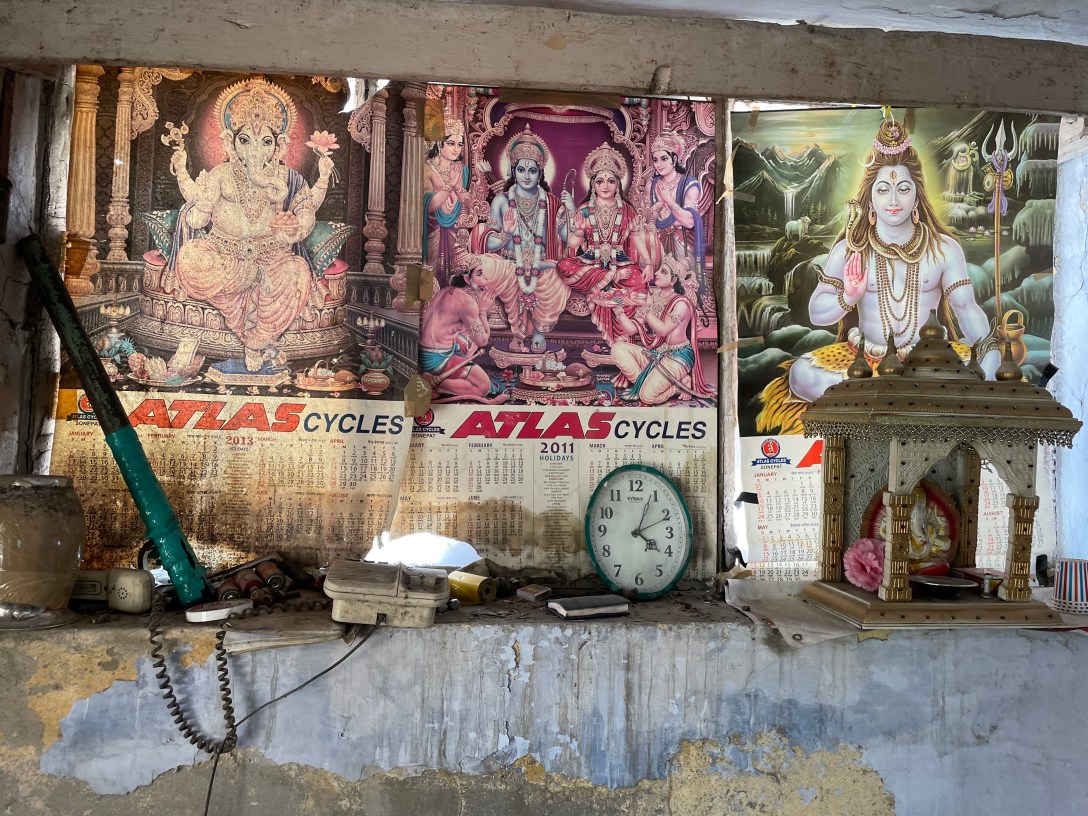
The Birth and Death of Atlas Cycles
The imagination of the cycle itself was integral to the fabrication of the middle class. The cycle was a fashionable form of transport—it was youthful and romantic, projecting an image of its male consumer as neither affluent nor entirely downtrodden. While in post-Independence India, the cycle become a popular means of mobility for the working class, Atlas Cycles targeted the middle class more than the working-class masses and presented a certain aestheticized use of the cycle.
Why I like leaning in. Way in. Into my all-girls’ hostel
Is a women’s hostel a utopia or dystopia, or is it even better—a place to ignore the boring universe of men? Poorva Rajaram reluctantly joined a hostel, only to fall in love with the wheels within wheels, the worlds within worlds she found—a sakhi sammelan, Renaissance Florence, a sandcastle, and a place to play academic Thelma and Louise.
The Madhaiyas of Butler Palace
For Manju and me, the short period of time when she has to grind something in the mixer–grinder is difficult. The noise interrupts the thread of our conversation, making us go quiet after that. I don’t like recipes that involve a lot of grinding. I often do the grinding myself before Manju comes to cook meals. But then, chhaunk too intrudes upon our conversations. The moment we see oil heating up, we know it’s the end of our conversation.
The Years
I know it is weird to divide my almost three decades in the city into before, during, not-quite-over, and after the pandemic, but I find myself increasingly slicing and muddling my life into these time frames. Conversations, memories, friendships, the logbook of losses, mood swings, even dreams, appear to be structured by these frames. This piece reflects on my years in the city and grapples with the relationship between longing and loss, forgetting and remembering, even as I know well that this relationship is unstable and contradictory and can never be resolved. This relationship does not dwell in the realm of my imagination. I live and feel it, and I will forever draw and redraw its contours and trajectories, mourning the impossibility of returning to that which is lost, and often not knowing what it is that I long for. There is no cure for this affliction.
Beyond flânerie: expanding the horizons of walking, part I
I have a certain discomfort with the realization that the literature on walking, whether in the form of narratives, fiction, histories, or manifestos, is overwhelming from a Western context. Moreover, this body of literature often conceptualizes walking as intrinsically subversive, desirable, special, and/or worthy of emulation. This discomfort has led me to seek out books on walking in non-Western contexts, especially South Asian. The idea behind this is not to uncover more ‘authentic’ modes of walking but rather to understand the situatedness of walking in particular kinds of places, people, and practices. It is instead to draw attention to and learn from ways of walking that don’t neatly fall into the categories most overrepresented in the literature on walking: flâneuring, loitering, leisure, an art form, an experiment. This listicle of six books, written in two parts, is a tiny fragment from my archive of books on walking in various Indian contexts.
Meeting place
Is love and concern for writing and for cities enough to continuously create, manage, steer, and run something? And what is this ‘something’? The blog is just the form, but what is it that I am, we are, making? Is it an archive that holds together a scatter of words woven into stories connecting space–times? Is it a process of collaborative thinking and doing? Is it a ‘meeting place’, much like the street corner, where ideas, people, and relationships intersect, partly by intentionality and partly by chance?
Auto-graphy
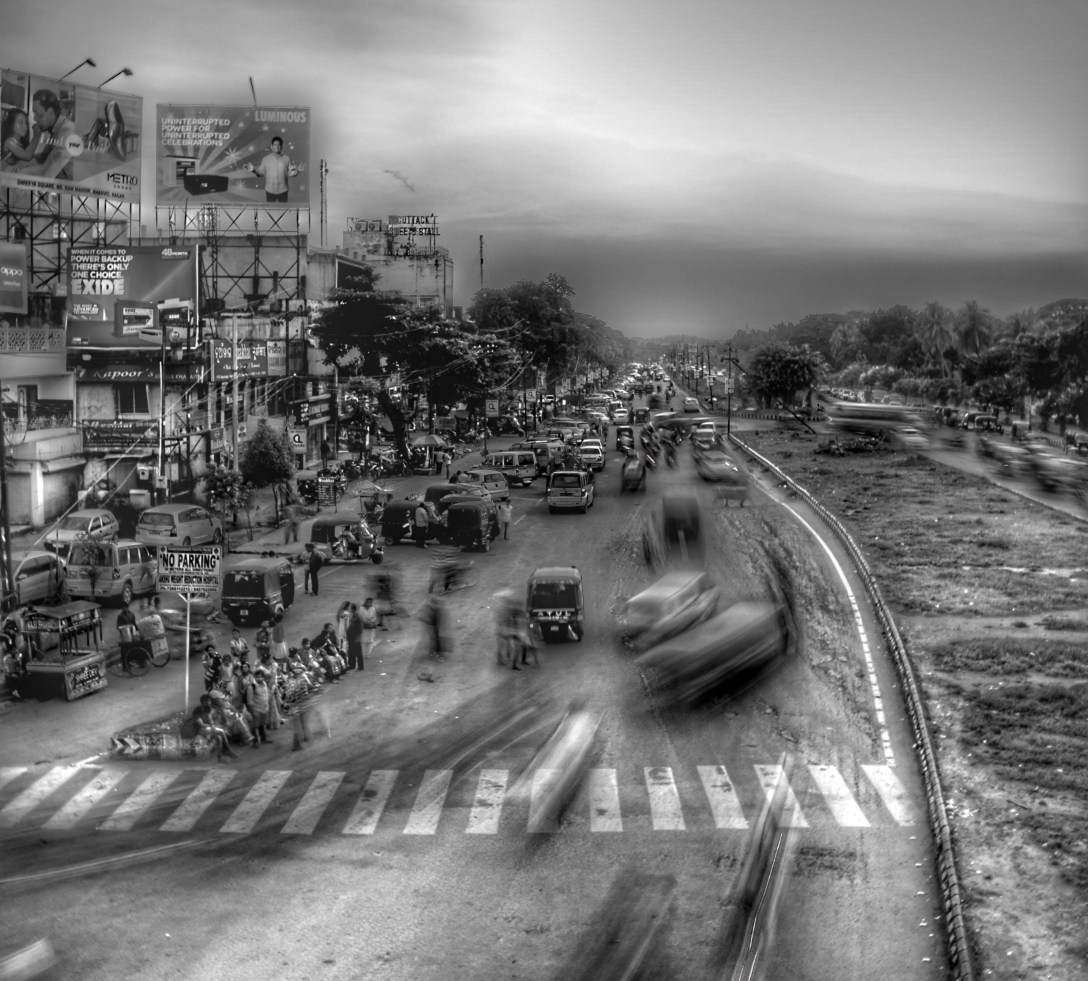
The shared auto in Bhubaneswar is a self-evidently polyglot space than any other place in the city, with the possible exception of a general class railway compartment. You also hear stories, like that of the battering, that you would rarely hear elsewhere. What is it about the enclosed space of a shared auto rickshaw that invites this willingness to expose oneself? I do not know.
What makes a footpath?
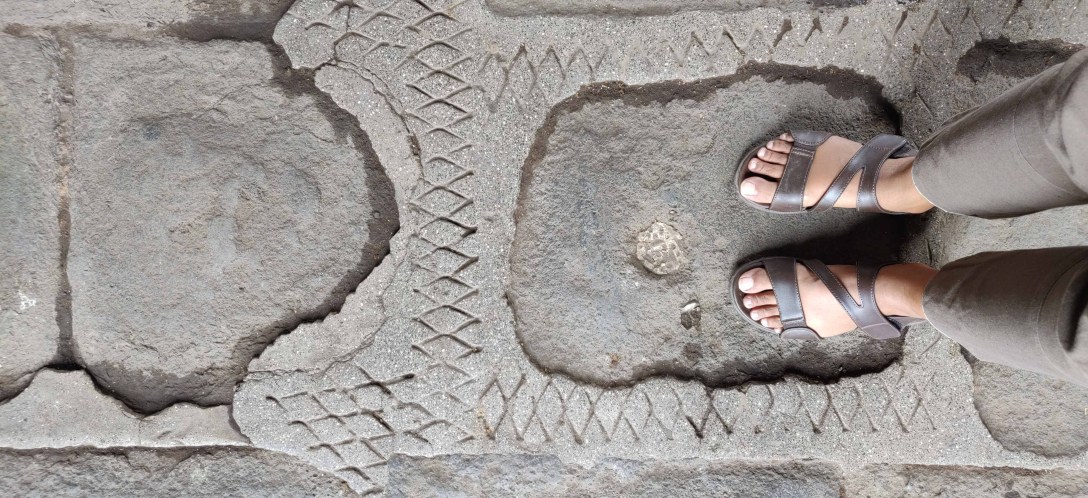
What makes the foot feel the foot? What makes a footpath, a walking path? What goes into making the ground beneath your feet yours? What does it take for a footpath to make walking a choice and not a constraint? The ordinary (rather, pedestrian) footpaths documented in this photo essay shift the focus from the celebrated and consistently developed centre to the ignored and faded margins of the city, making sidewise gleams at the multiple experiences nestling here possible.
Walk economy
Far from disappearing, pedlars have a pervasive presence in cities—around busy intersections such as traffic signals, metro stations, tourist spots, bus terminals, railway stations, religious places, public parks and monuments; within residential localities, neighbourhood markets and industrial areas; outside office complexes, educational institutions, hospitals, shopping centres and even malls and supermarkets. They ply an entire gamut of trades from knife-sharpening, shoe polishing, miracle cures and ear-cleaning to providing chai and snacks, as also a wide range of commodities. This essay is a response to the images captured by Gopal in his city Mumbai, from the location of my interest as an anthropologist in forms of walking in the city as well as the associational life of streets around the locus of economic activities.