Of gaddhas and ghumna: Women traversing life and landscape in the city

As I journeyed through the city with these women, I had been thinking a lot about landscapes. When the parts of the story no longer seemed to coalesce into a plot, I thought about how incongruous things can hang together in a place, in an atmosphere. And so, I found that the antidote to my own growing vertigo was to join these women on excursions (ghumna) around the city. Though these outings happened infrequently, to go ghumna was a favourite activity of many of the women I spent time with. These women, who hailed from poor, predominantly Muslim neighbourhoods such as Nizamuddin Basti, Okhla, and Jaitpur, spent much time plotting the next opportunity to go ghumna, often concocting elaborate cover-ups for family members.

The House of Dreams

If you’re walking near the dargah of Hazrat Nizamuddin Auliya in the neighbourhood of Nizamuddin Basti in Delhi, you might cross, but not notice, a grey door with a grey metal flower knob and no signage. If you are passing by on a Tuesday afternoon, you will, most likely, notice a group of children in descending order of height gathered outside the grey door. The children dart in every five minutes, running up the stairs behind the door that lead to the first and second floors of the building. They leave trails of chips, flowers, coins, plastic toys, and small footwear in their wake.

The Birth and Death of Atlas Cycles 

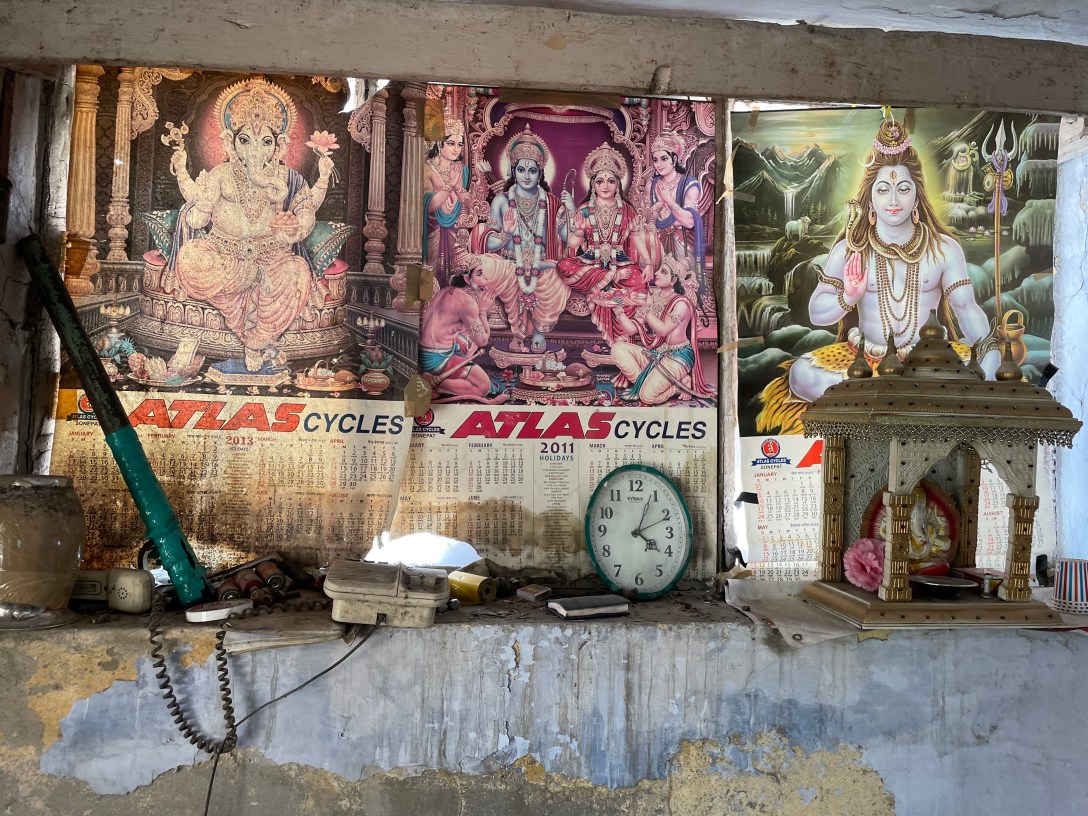
The imagination of the cycle itself was integral to the fabrication of the middle class. The cycle was a fashionable form of transport—it was youthful and romantic, projecting an image of its male consumer as neither affluent nor entirely downtrodden. While in post-Independence India, the cycle become a popular means of mobility for the working class, Atlas Cycles targeted the middle class more than the working-class masses and presented a certain aestheticized use of the cycle.

Why I like leaning in. Way in. Into my all-girls’ hostel

Is a women’s hostel a utopia or dystopia, or is it even better—a place to ignore the boring universe of men? Poorva Rajaram reluctantly joined a hostel, only to fall in love with the wheels within wheels, the worlds within worlds she found—a sakhi sammelan, Renaissance Florence, a sandcastle, and a place to play academic Thelma and Louise.

The Madhaiyas of Butler Palace

For Manju and me, the short period of time when she has to grind something in the mixer–grinder is difficult. The noise interrupts the thread of our conversation, making us go quiet after that. I don’t like recipes that involve a lot of grinding. I often do the grinding myself before Manju comes to cook meals. But then, chhaunk too intrudes upon our conversations. The moment we see oil heating up, we know it’s the end of our conversation.

Auto-graphy

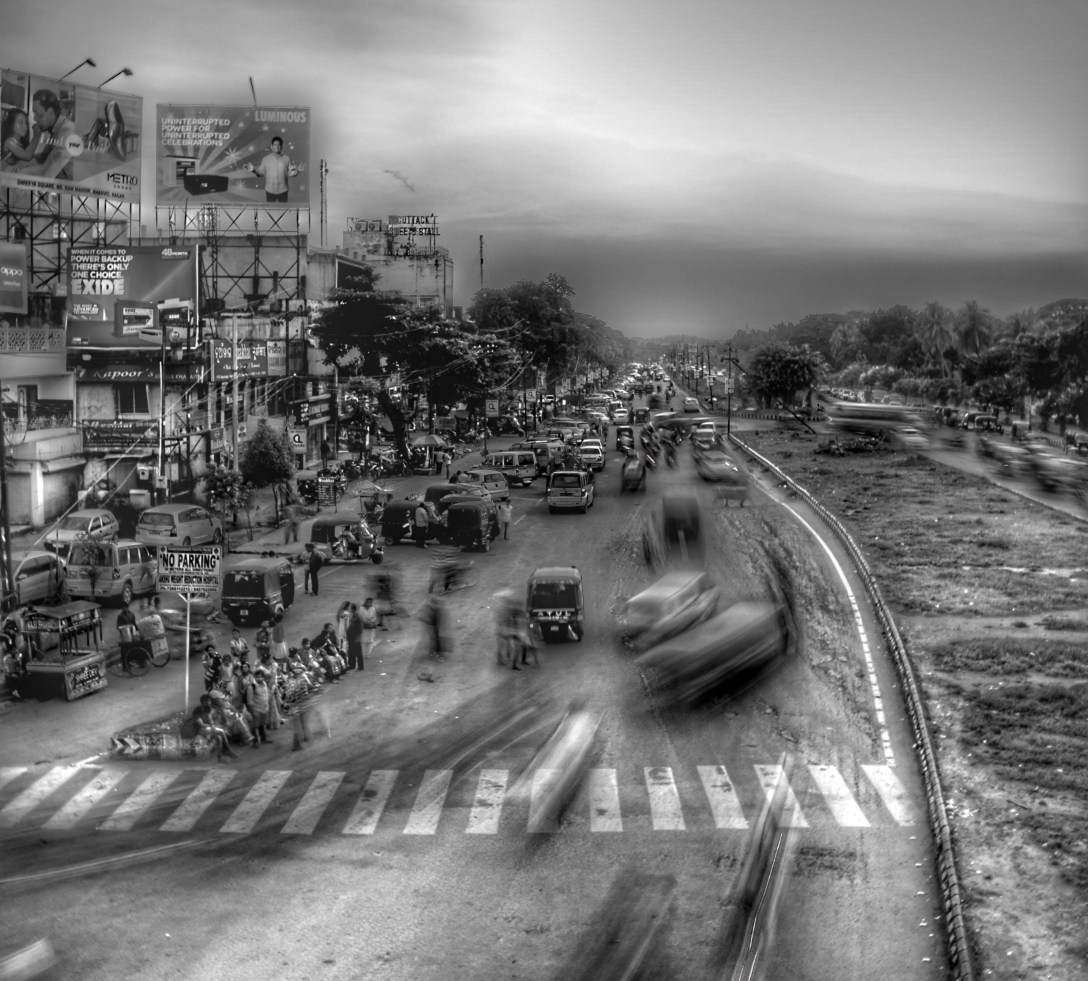
The shared auto in Bhubaneswar is a self-evidently polyglot space than any other place in the city, with the possible exception of a general class railway compartment. You also hear stories, like that of the battering, that you would rarely hear elsewhere. What is it about the enclosed space of a shared auto rickshaw that invites this willingness to expose oneself? I do not know. 

What makes a footpath?

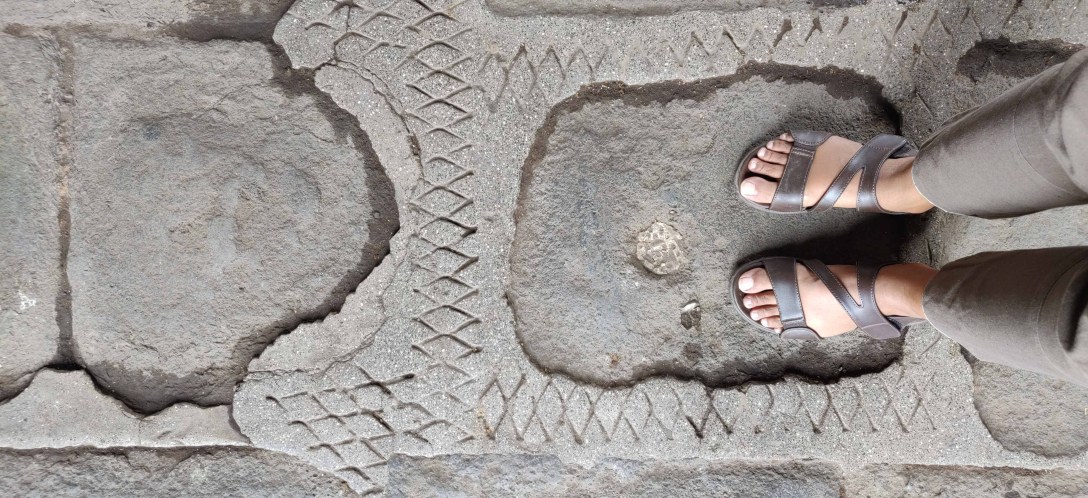
What makes the foot feel the foot? What makes a footpath, a walking path? What goes into making the ground beneath your feet yours? What does it take for a footpath to make walking a choice and not a constraint? The ordinary (rather, pedestrian) footpaths documented in this photo essay shift the focus from the celebrated and consistently developed centre to the ignored and faded margins of the city, making sidewise gleams at the multiple experiences nestling here possible.

The city, in love

The two pieces included in this post are part of a book in progress that Sailen is writing, comprising a series of Odia short stories set in Bhubaneswar. The stories are around the theme of ephemeral and routine encounters of love, or its possibility, located in places that serve as public and private landmarks of everyday life in the city.

Chiragh Dilli matters!

The blog has taken the shape it has over these years through the love and labour, struggles and dilemmas of the two of us—Samprati and Sarover. Making something together is never simple or easy. What has kept us going is our love for writing, for cities and for creating a unique space for thinking with cities, as well as the immense support, cheering on, love and respect of our readers, guest authors and collaborators. This is not a quibble about technicalities—a co-founder can remain a co-founder—but about two women taking ownership for something they have created, about not being okay with false impressions, intentionally or unintentionally, being in public circulation, about not letting their labour be appropriated. 

When is qasbah?

The Kasba of my childhood was never a destination, let alone a subject of interest or enquiry. Nearly two decades later, when I arrived in a qasbah in Uttar Pradesh, I had learnt to spell it with a ‘q’, the Latin equivalent of the Arabic qaf. I had also learnt a few other things about it as a student of history. Broadly, the qasbah was distinct from a shahr (city) and often emerged around the qila (fort) of a military commander. In some parts of the Islamic world, the qila itself was called a qasbah. Historians have variously translated the qasbah as ‘small township’, ‘commercial mart’, ‘between a village and a city’ and ‘garrison town’. Indeed, qasbah has implied different kinds of settlements in different places at different points in time, and these meanings are accessed through the lenses of those who wrote about these settlements ‘not as points or areas on maps, but as integrations of space and time; as spatio-temporal events’.

Mumbai’s migrant gods

Thousands of shrines of varying sizes reside in the streets of Mumbai. These shrines act as markers of new settlements and localities. Most of them represent and embody the identity of the people who brought them here. But more often than not, they hold together the hopes and aspirations of migrant communities as they navigate the precarity of the life worlds that a city like Mumbai generates. The shrines act as magnets, drawing together people with shared backgrounds and attracting sometimes a set of new believers. They belong to different streams of faith, ranging from organized religions to folk, tribal and occupational forms of worship. Many of these are exclusively cared for by women like the Velankanni Matha shrines. On the other hand, roadside Hanuman shrines seem to be a favourite of young migrant men who live alone or in groups in the city.

A step in New York/A footfall in Lahore

I lived for a decade in Chicago, where I could only walk in the Midway Plaisance—a wide boulevard with a fat-bellied, grassy middle—in Hyde Park. The 1893 World’s Columbian Exhibition was held in Hyde Park and the Plaisance was a covered walk with concessions and private entertainment decked around it: markets from Algeria and Tunis, an ‘Indian’ village, an Oriental (Chinese) village and theatre, an Indian bazaar, a Moorish palace, a street in Cairo. The official guidebook told the white ‘walkers’ that they should expect to bump into an ‘Indian’ family making their bread or a Pathan sepoy waxing his moustache. Franz Boas, later to lead Columbia’s anthropology department, was the main force behind the 1893 Chicago Fair and had been hired by Frederic Putnam, then director of Harvard University’s Peabody Museum.