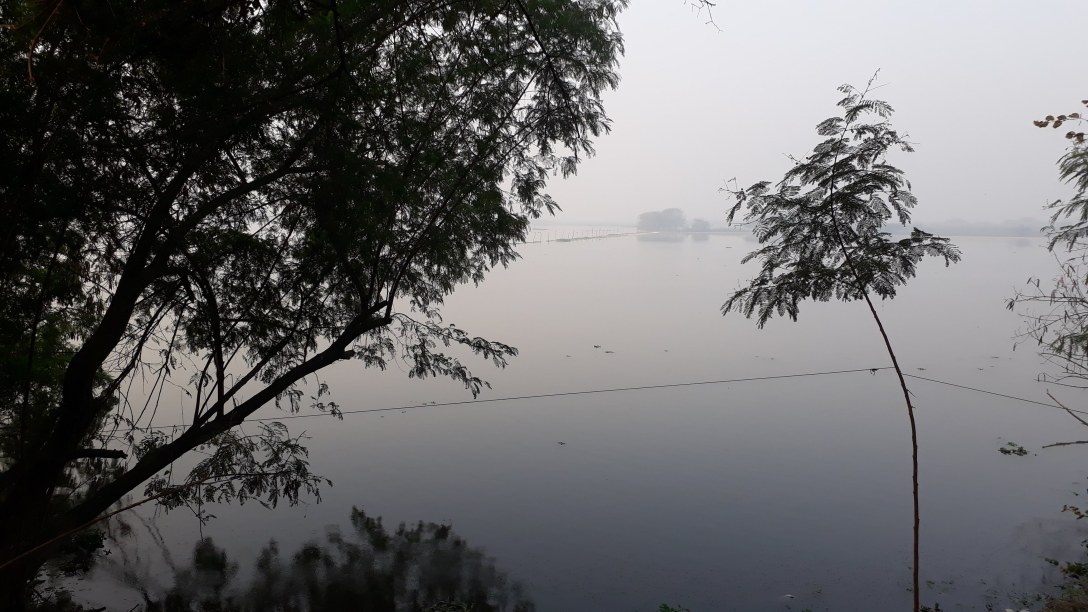
Iโve been thinking about windows. Since I moved cities, Iโve been thinking about windows. And looking at and through them. Through this looking, I move forward with time, sometimes attempt to hold it still, and at other times, let it take me elsewhere, to a time that has passed or is perhaps waiting for me. Some windows and their views remind me of other windows in other places, including windows that live in books and films, all real because of the feelings they evoke and the meanings they reveal or donโt. I write this piece as live in a new city, with curiosity and hesitation, looking at it through its windows and through the other windows these open up.
Tag: walking
The Years
I know it is weird to divide my almost three decades in the city into before, during, not-quite-over, and after the pandemic, but I find myself increasingly slicing and muddling my life into these time frames. Conversations, memories, friendships, the logbook of losses, mood swings, even dreams, appear to be structured by these frames. This piece reflects on my years in the city and grapples with the relationship between longing and loss, forgetting and remembering, even as I know well that this relationship is unstable and contradictory and can never be resolved. This relationship does not dwell in the realm of my imagination. I live and feel it, and I will forever draw and redraw its contours and trajectories, mourning the impossibility of returning to that which is lost, and often not knowing what it is that I long for. There is no cure for this affliction.
Beyond flรขnerie: expanding the horizons of walking, part I
I have a certain discomfort with the realization that the literature on walking, whether in the form of narratives, fiction, histories, or manifestos, is overwhelming from a Western context. Moreover, this body of literature often conceptualizes walking as intrinsically subversive, desirable, special, and/or worthy of emulation. This discomfort has led me to seek out books on walking in non-Western contexts, especially South Asian. The idea behind this is not to uncover more โauthenticโ modes of walking but rather to understand the situatedness of walking in particular kinds of places, people, and practices. It is instead to draw attention to and learn from ways of walking that donโt neatly fall into the categories most overrepresented in the literature on walking: flรขneuring, loitering, leisure, an art form, an experiment. This listicle of six books, written in two parts, is a tiny fragment from my archive of books on walking in various Indian contexts.ย
What makes a footpath?
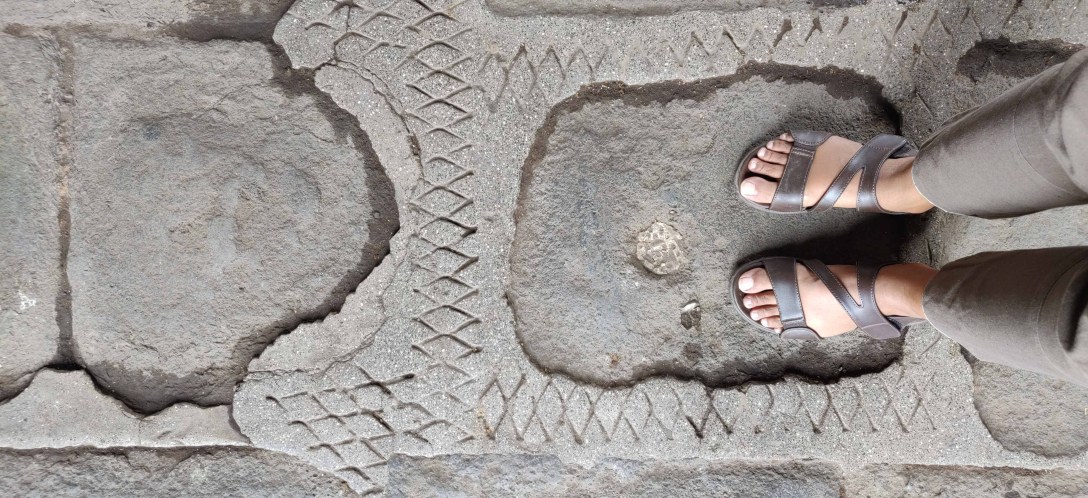
What makes the foot feel the foot? What makes a footpath, a walking path? What goes into making the ground beneath your feet yours? What does it take for a footpath to make walking a choice and not a constraint? The ordinary (rather, pedestrian) footpaths documented in this photo essay shift the focus from the celebrated and consistently developed centre to the ignored and faded margins of the city, making sidewise gleams at the multiple experiences nestling here possible.
Walk economy
Far from disappearing, pedlars have a pervasive presence in citiesโaround busy intersections such as traffic signals, metro stations, tourist spots, bus terminals, railway stations, religious places, public parks and monuments; within residential localities, neighbourhood markets and industrial areas; outside office complexes, educational institutions, hospitals, shopping centres and even malls and supermarkets.ย They ply an entire gamut of trades from knife-sharpening, shoe polishing, miracle cures and ear-cleaning to providing chai and snacks, as also a wide range of commodities. This essay is a response to the images captured by Gopal in his city Mumbai, from the location of my interest as an anthropologist in forms of walking in the city as well as the associational life of streets around the locus of economic activities.
A step in New York/A footfall in Lahore
I lived for a decade in Chicago, where I could only walk in the Midway Plaisanceโa wide boulevard with a fat-bellied, grassy middleโin Hyde Park. The 1893ย Worldโs Columbian Exhibitionย was held in Hyde Park and the Plaisance was a covered walk with concessions and private entertainment decked around it: markets from Algeria and Tunis, an โIndianโ village, an Oriental (Chinese) village and theatre, an Indian bazaar, a Moorish palace, a street in Cairo. The official guidebook told the white โwalkersโ that they should expect to bump into an โIndianโ family making their bread or a Pathan sepoy waxing his moustache. Franz Boas, later to lead Columbiaโs anthropology department, was the main force behind the 1893 Chicago Fair and had been hired by Frederic Putnam, then director of Harvard Universityโs Peabody Museum.
Talking places
Can the new be experienced in all its dizzying and excessive newness, or do we continuously fall back on the crutches of familiarity, no matter how inept or even obsolete?ย Is it inevitable that we carry the burdensโof our familiar selves, homes and not-quite-homes, cities and livesโwhen we walk the path that can lead anywhere because we havenโt walked it ever before?
A view from across the riverย
On the face of it, Patparganjโs apartments appear to be small islands, each holding together a set of people with a shared social background. And there are apartment dwellers, who manage to unlook and avoid the sea of life the islands are surrounded by, through the blinkers of their class and aspirations, shopping for vegetables and eating street food from the evasive confines of their cars or seeking the โhappening cityโ elsewhere. Yet, life here, as I have come to experience over the years, does not inevitably have to be one of isolated living confined to the apartments.ย
Corona Diaries
The hour from night to day. The hour from side to side. The hour for those past thirty. The hour swept clean to the crowing of cocks. The hour when earth betrays us. The hour when wind blows from extinguished stars. The hour of and-what-if-nothing-remains-after-us. The hollow hour. Blank, empty. The very pit of all… Continue reading Corona Diaries
Thereโs something about the street
โI? I walk alone; The midnight street Spins itself from under my feet; When my eyes shut These dreaming houses all snuff out; Through a whim of mine Over gables the moon's celestial onion Hangs high.โ โโSoliloquy of the Solipsistโ, Sylvia Plath, 1956 โI do not know which of us has written this page.โ โJorge… Continue reading Thereโs something about the street
I want to ride my bicycle bicycle bicycle…
I was gifted a cycle last year by a โcyclistโ friend but have used it only a couple of times, sometimes in a large park a few kilometres away from my house and a few times to buy vegetables and groceries closer home. Even as I had been warned by friendsโpart of a tiny minority… Continue reading I want to ride my bicycle bicycle bicycle…
What she thinks when she thinks about walking
Since weโre not young, weeks have to do time for years of missing each other. Yet only this odd warp in time tells me weโre not young. Did I ever walk the morning streets at twenty, my limbs streaming with a purer joy? did I lean from any window over the city listening for the… Continue reading What she thinks when she thinks about walking